
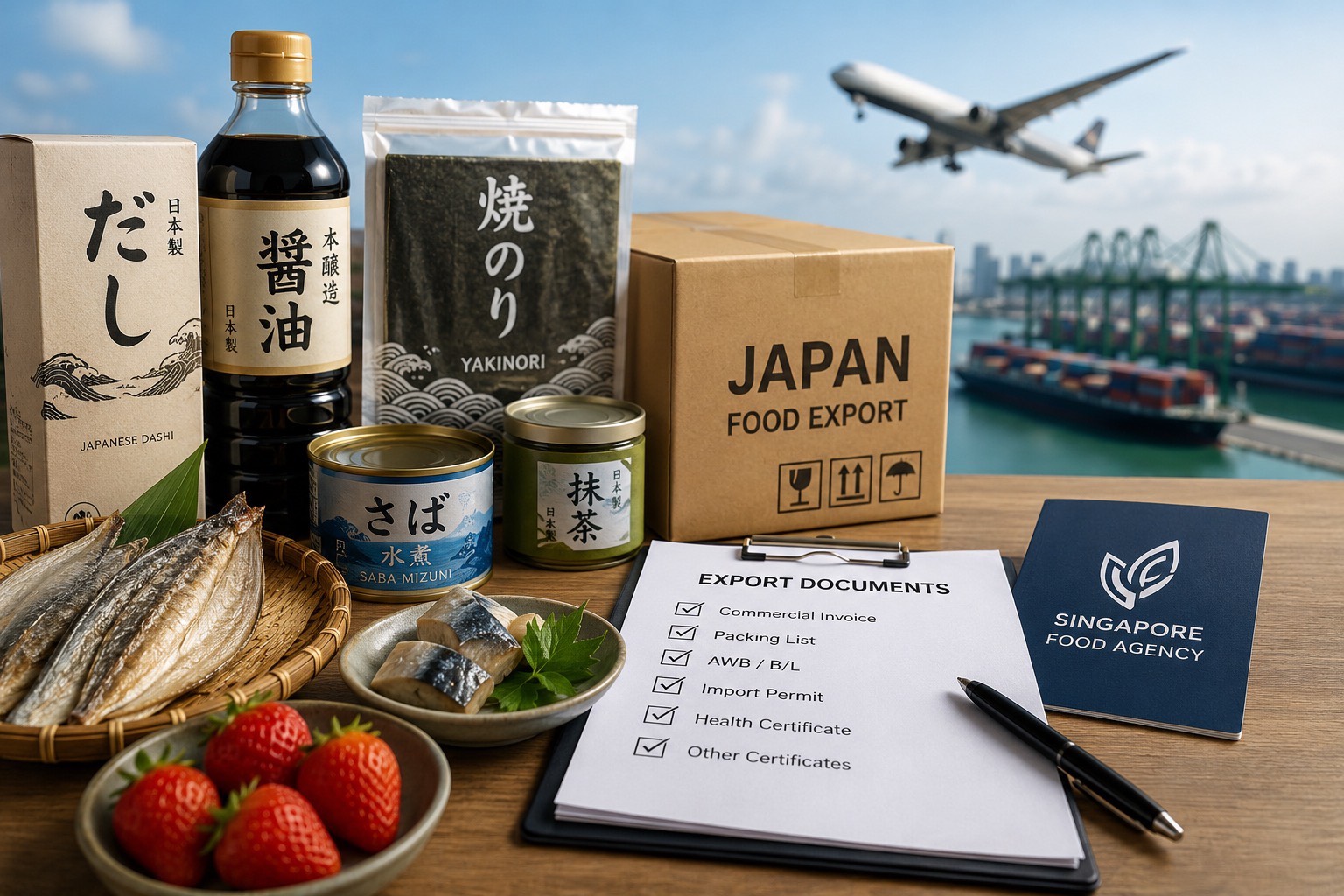


When exporting food products from Japan to Singapore, it is important to understand not only the transportation arrangements but also Singapore’s food import regulations in advance.
In Singapore, the Singapore Food Agency (SFA) regulates the import and sale of food products to ensure food safety.
A wide range of Japanese food products, including fresh seafood, processed foods, dairy products, and confectionery, are exported to Singapore. However, not all food products are subject to the same import procedures.
Import Procedures Vary Depending on the Type of Food
In Singapore, the required registrations, licences, and import conditions vary depending on the type of food product.
Different requirements apply to products such as processed foods, fish and fish products, meat and meat products, and fresh fruits and vegetables.
For certain products, particularly fish, meat, and eggs, additional certificates or specific import requirements may apply.
Therefore, before starting an export, it is important to confirm:
“Can this product be imported into Singapore?”
“What procedures and requirements apply?”
Required Documents Also Depend on the Product
When exporting food products, additional documents may be required depending on the type of product, in addition to standard shipping and customs documents.
Common documents include:
- Commercial Invoice
- Packing List
- AWB / B/L (Air Waybill / Bill of Lading)
- Import Permit
- Health Certificate and other relevant certificates
However, not all food products require the same documents.
The necessary procedures and documentation vary depending on the type and risk level of the food product, making it important to confirm the requirements before shipment.
Pay Attention to Food Labelling Requirements
For prepacked food products sold in Singapore, specific food labelling requirements also apply.
Regulations concerning food labelling were amended effective January 30, 2026.
Depending on the product, labels may be required to include information such as the food name, ingredients, allergen information, net quantity, and country of origin in accordance with Singapore’s regulations.
Just because a product can be legally sold in Japan does not necessarily mean it can be sold in Singapore without modification.
Before exporting, it is important to check not only the food import requirements but also whether the product’s labelling complies with Singapore’s regulations.
Advance Confirmation Is Key When Exporting Food
The basic process for exporting food products to Singapore is as follows:
① Identify the type of food product
↓
② Check the applicable import requirements and procedures
↓
③ Prepare the necessary documents
↓
④ Arrange transportation and customs clearance
↓
⑤ Delivery within Singapore
If required documents or import requirements are discovered only after shipment, this may result in customs delays or other issues.
For this reason, it is important to confirm the necessary requirements at the planning stage, before shipping the product.
Exporting Food Products from Japan to Singapore? Contact NPK LOGISTICS
NPK LOGISTICS provides comprehensive logistics support for exports from Japan to Singapore, from domestic pickup in Japan to air and ocean freight, customs clearance in Singapore, and final delivery within Singapore.
We also provide transportation solutions tailored to the characteristics of each shipment, including fresh seafood, chilled products, and processed foods that require temperature-controlled transportation.
If you are considering exporting food products from Japan to Singapore, please feel free to contact NPK LOGISTICS.